VivaTech 2026: Europe's Biggest Tech Event Turns 10, With AI Sovereignty Front and Center
VivaTech 2026 — Europe's largest startup and tech event — runs June 17–20 in Paris for its 10th anniversary edition. The theme is 'Artificial Intelligence: Impact, Not Illusion,' and the backdrop is Europe's push for tech sovereignty amid U.S. AI dominance. Here's a Day One rundown.
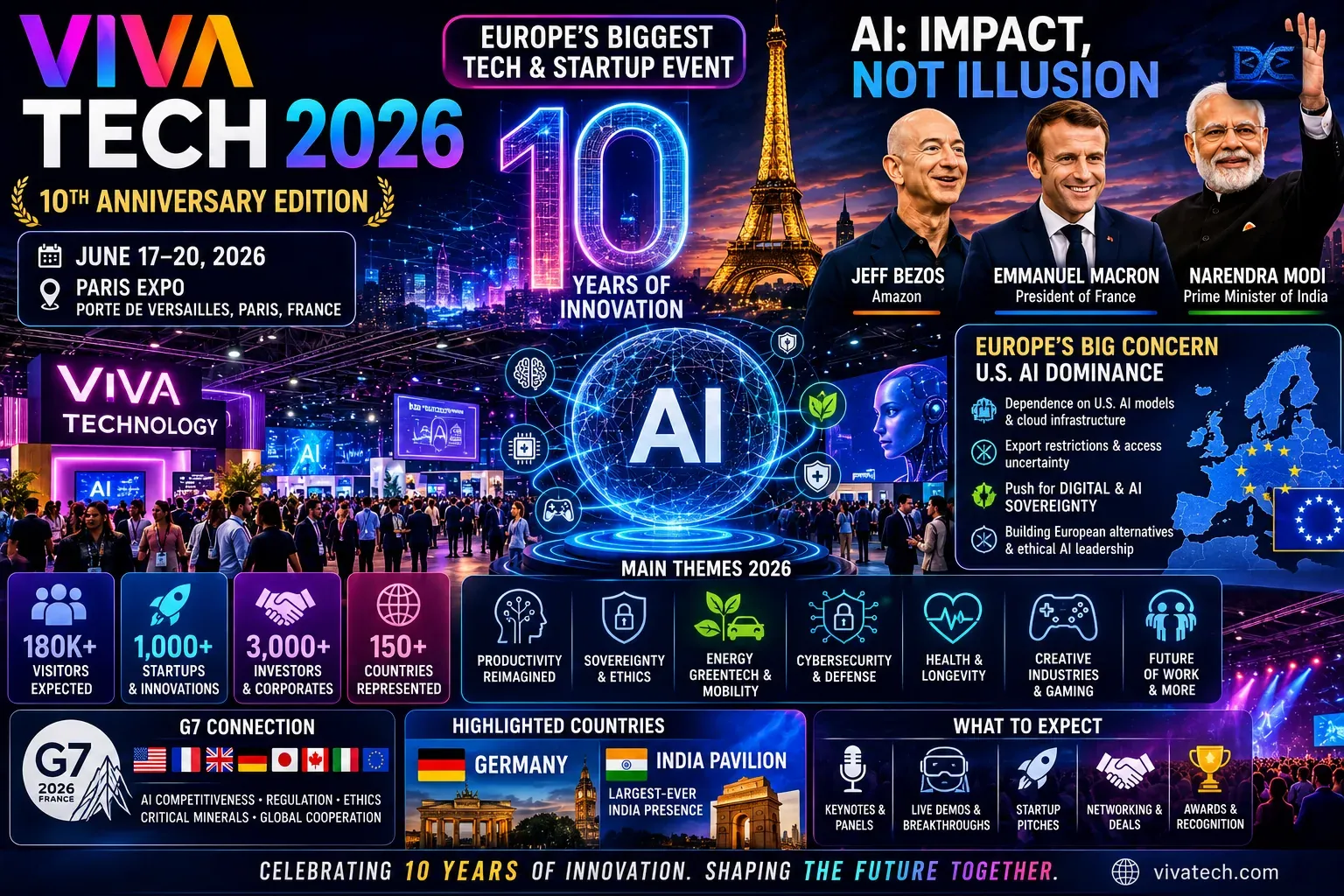
VivaTech 2026 — Europe’s largest startup and technology event — opened its 10th anniversary edition on June 17 and runs through June 20, 2026 at Paris Expo Porte de Versailles. Day One opened with strong attendance, keynotes, demos, and networking, with an expected 180,000–200,000 visitors across the four days.
High-profile names on and around Day One included Jeff Bezos and French President Emmanuel Macron.
Event in progress. This covers the opening days. VivaTech runs through June 20, so more major announcements are expected — treat this as a snapshot, not the final word.
The 2026 theme: impact, not illusion
The overarching theme is “Artificial Intelligence: Impact, Not Illusion” — a pointed framing toward real-world AI applications over hype. Key tracks include:
- Productivity Reimagined
- Sovereignty & Ethics
- Energy, GreenTech & Mobility
- Cybersecurity & Defense
- Health & Longevity
- Creative Industries & Gaming
- Future of Work, Diversity & Inclusion, and more
Over 1,000 startups and innovations are on display, alongside corporate showcases from Samsung (AI-powered connected care), Orange, SAP, Capgemini, and others.
The backdrop: European concerns about U.S. AI dominance
The dominant subtext of the whole event is technological sovereignty. Europe is actively pushing for independence across digital infrastructure, cloud, chips, and AI — amid heavy reliance on U.S. companies (OpenAI, Anthropic, Google, and others) for advanced models and infrastructure.
That anxiety has sharpened recently. U.S. export curbs and restrictions on access to top AI models — including Anthropic’s most advanced systems — have raised fears that European access and competitiveness could swing with American policy shifts. The on-floor conversations focus on:
- Building European alternatives in models, cloud, and chips.
- Industrial competitiveness, regulation, and ethics.
- Reducing dependence on foreign cloud/chips while still collaborating strategically with global players.
The G7 connection
The timing isn’t a coincidence. The G7 Summit (hosted in Évian, France, around June 15–17) overlaps VivaTech in both schedule and substance. Tech leaders from major AI firms — Anthropic, OpenAI, Google, and Mistral — attended G7 sessions on AI competitiveness, regulation, and reducing reliance on China for critical minerals. Those discussions are spilling directly onto the VivaTech floor.
Day One highlights
| Area | What stood out |
|---|---|
| Conversations | AI-dominated across the floor — sovereignty, ethics, competitiveness |
| Sessions | Dual-use tech, Physical AI, digital sovereignty (incl. EU–India), sustainability |
| Corporate | Samsung, Orange, SAP, Capgemini showcases |
| Country focus | Germany is the highlighted country this year |
| India | Largest-ever India Pavilion; high-profile participation announced earlier |
There are also free public festival elements and experiences (including pre-event activations around the Champs-Élysées), plus the usual side events, pitches, awards, and investor meetings.
Why it matters
1. Sovereignty is moving from slogan to strategy. For a decade VivaTech was a startup showcase. In 2026 it doubles as the stage where Europe argues — out loud — for its own models, cloud, and chips, prompted by how exposed export-control shifts have left it.
2. “Impact, not illusion” is a deliberate tonal reset. After years of generative- AI hype cycles, the framing pushes toward deployed, measurable applications: health, energy, mobility, defense. That’s a useful filter for builders evaluating what’s real.
3. Policy and product are now inseparable. With the G7 overlapping and export controls in the headlines, the event makes clear that where you can run a model is now as strategic as how good the model is.
Takeaway: VivaTech 2026 is Europe’s pitch for an AI future that balances innovation with sovereignty, ethics, and industrial strength — and a signal that the model layer is becoming a geopolitical question, not just a technical one.
Bottom line
In its 10th year, VivaTech is both a celebration and a statement. The demos and startups are the show; technological sovereignty is the story. With the G7 overlap, export-control tensions, and a deliberate “impact over illusion” theme, Paris is hosting one of the clearest expressions yet of Europe’s ambition to shape AI on its own terms.
The event runs through June 20, so expect more announcements. For the latest, check the official VivaTech site.
Sources: VivaTech 2026 program and opening-day coverage (June 17, 2026), plus reporting on the overlapping G7 Summit in Évian. The event is ongoing; details may evolve through June 20.
Related articles

Europe vs. U.S. AI Dominance: The Push for Tech Sovereignty Explained
European leaders are worried about depending on American AI models, chips, and cloud. With the G7 Summit and VivaTech 2026 in the spotlight, here's a clear guide to why 'tech sovereignty' is the phrase of the moment — and what Europe is doing about it.
WeRide and Uber Bring Robotaxis to Europe: Madrid and Zurich in 2026
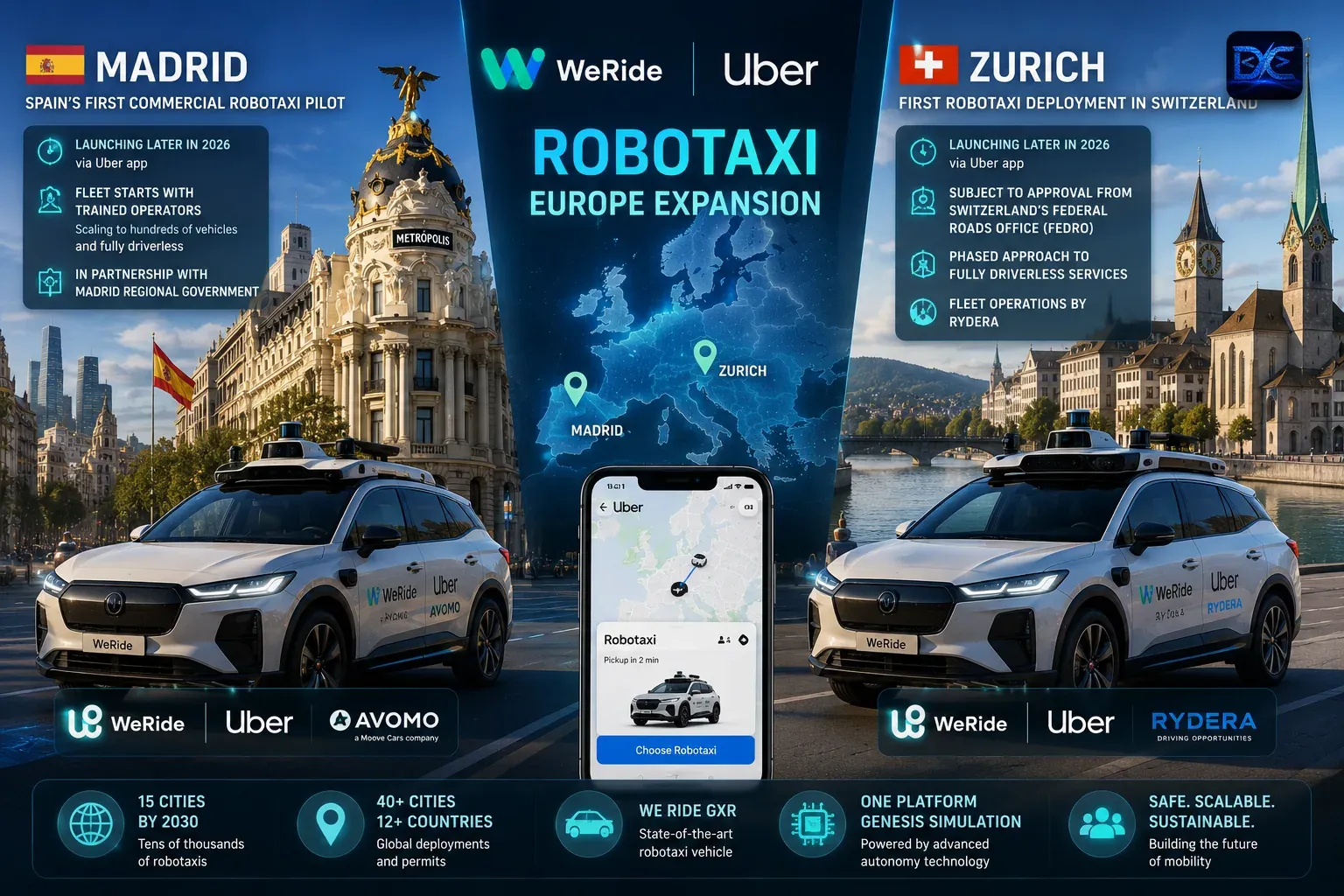
WeRide (NASDAQ: WRD) and Uber are launching their first commercial robotaxi services in Europe — Madrid (announced June 2) and Zurich (announced June 17, 2026). Here's what each deployment involves, the asset-light model behind it, and how it fits their 15-cities-by-2030 plan.
OpenAI's Q1 2026: $5.7B Revenue, $3.7B Burn — Growth at All Costs
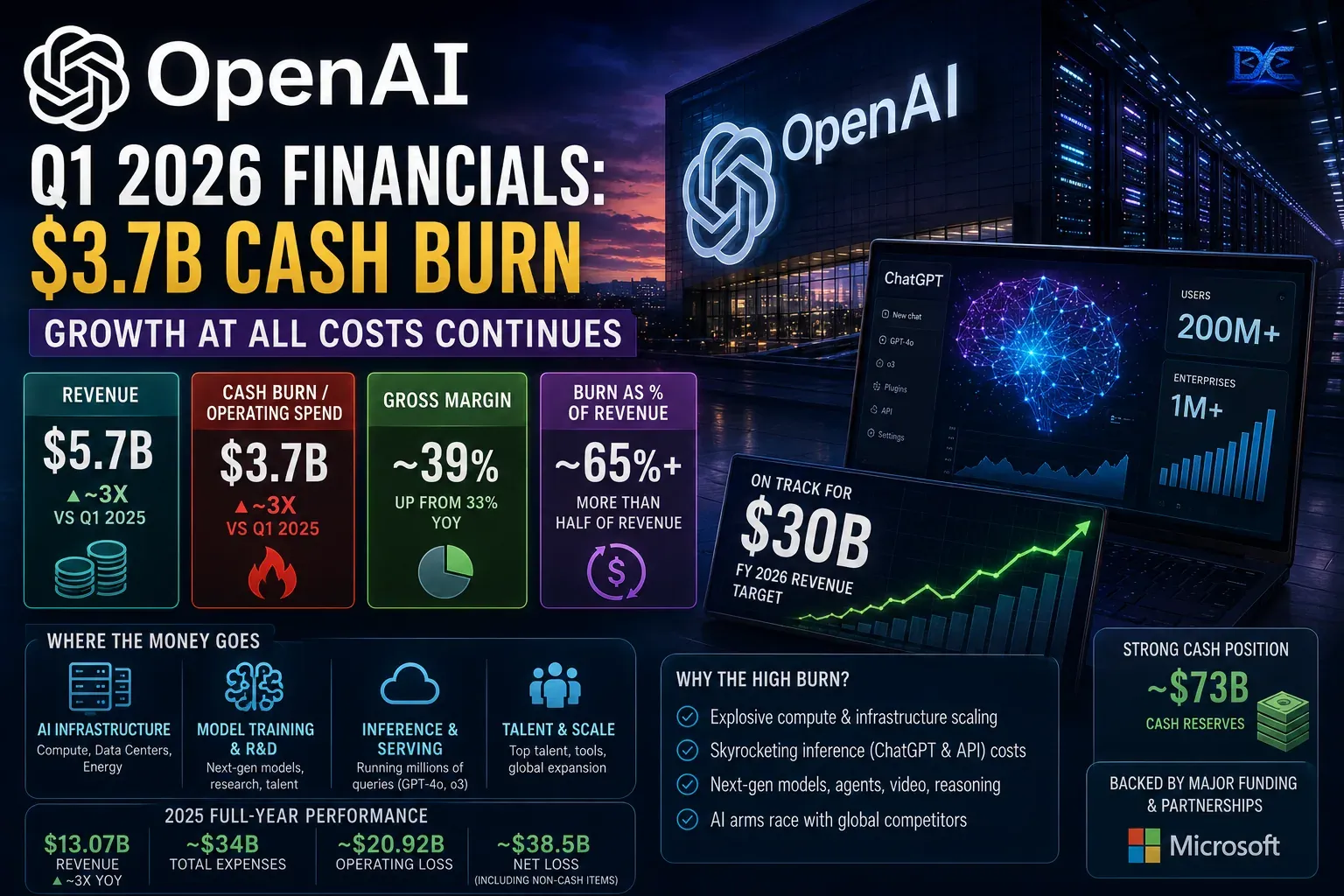
OpenAI's first quarter of 2026 shows revenue and cash burn both roughly tripling year over year. Here's a clear, no-jargon look at the numbers, where the money goes, why the burn is so high, and what it means for the road to profitability.
Have a project or an idea?
We don't just write about software — we build it. Tell us what you're working on and we'll get back within 1–2 business days.